You just got the keys. Somewhere between the moving boxes and the first leaky tap, you'll realize you own a house and not much to fix it with. The instinct is to grab the biggest, shiniest 200-piece tool set on the shelf and call it sorted. Don't.
Here's the honest version: those mega-sets are mostly filler. A blow-moulded case the size of a suitcase, half of it sockets you'll never touch and pliers that bend the first time you lean on them. You pay for the piece count, not the quality. A new homeowner is far better off buying ten genuinely good tools that handle 95% of real jobs, and adding the oddball stuff later when an actual project demands it.
We researched what actually earns its place in a homeowner's kit and matched each tool to what to look for and roughly what to pay. Prices move around constantly, so treat every number as a starting point and check the live price before you buy.
Some links are affiliate links — if you buy, we may earn a commission at no cost to you. It never changes our pick.
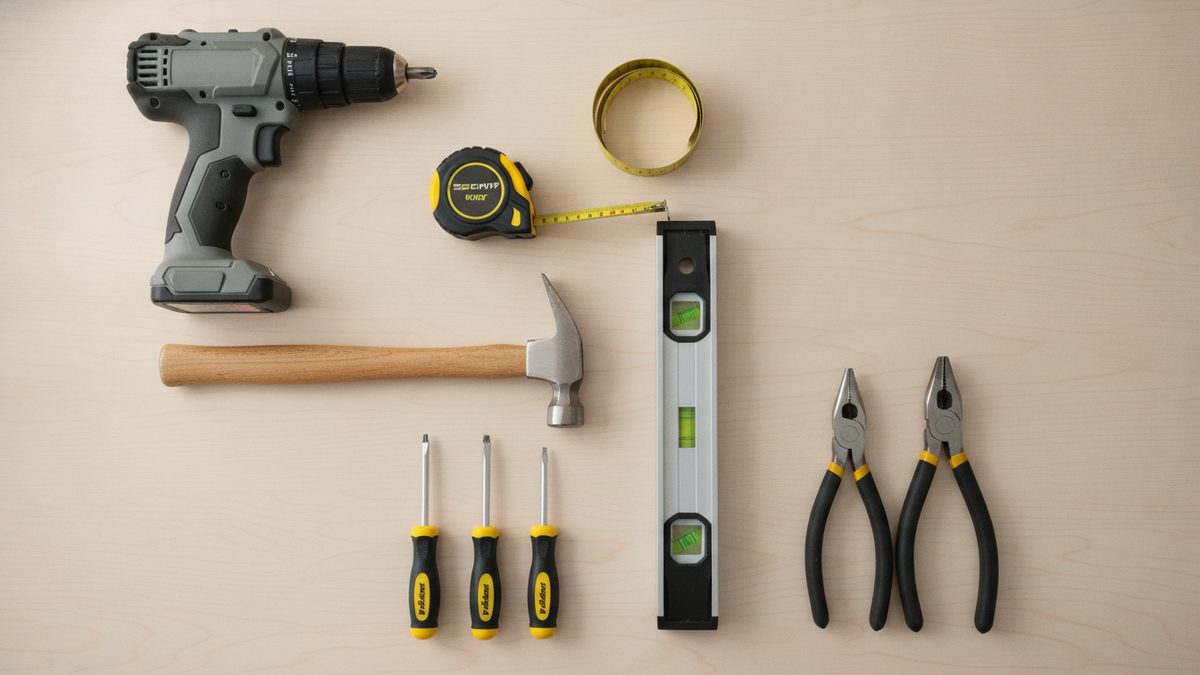
1. A cordless drill/driver
If you buy one power tool, buy this. It drills holes and drives screws, which covers flat-pack furniture, hanging shelves, mounting blinds, and a hundred other jobs. It's the single tool that turns "I'll call someone" into "I'll do it this afternoon."
What to look for: A 20V (or 18V) brushless model with two batteries and a charger. Brushless motors run longer and last longer, and the price gap over older brushed motors has shrunk to almost nothing. Skip the cordless screwdrivers shaped like a fat pen, they're too weak for real work. A compact brushless drill/driver kit lands around $100–$150 (check current price); bare tools start near $80 if you already own batteries.
2. A claw hammer
Boring, essential, and one you should not cheap out on. A bad hammer transmits every blow straight into your wrist and elbow.
What to look for: A 16 oz claw hammer with a one-piece steel or fiberglass handle and a shock-reducing grip. Sixteen ounces is the sweet spot, heavy enough to drive a nail, light enough to control. A solid name-brand one runs around $25–$40 (check current price), and it'll outlive you.
3. A 25-foot tape measure
You'll use this constantly: furniture that has to fit, curtain rods, picture spacing, "will the fridge go through the door." A 25-footer covers most rooms in a single pull.
What to look for: A 25 ft tape with a wide, stiff blade that stays rigid when extended (the "standout") and a solid lock. Wider blades don't flop over when you measure across a room solo. A quality one is around $15–$25 (check current price).
4. A torpedo level
The difference between a shelf that looks fine and a shelf that quietly drives you insane every time you walk past it. Your phone's level app is fine in a pinch, but a real level is faster and more accurate.
What to look for: A 9-inch magnetic torpedo level with clear, easy-to-read vials. Magnetic is handy for anything metal. Around $15–$30 (check current price). A longer 2-foot level is nice later, but the torpedo handles most homeowner jobs.
5. A screwdriver set
Even with a drill, you need hand screwdrivers for tight spots, delicate work, and the screws a drill would strip in a heartbeat.
What to look for: A set with a range of Phillips and flathead sizes, plus a small precision driver or two for electronics and eyeglasses. A ratcheting driver with swappable bits is a great space-saver. A decent 20-to-30-piece set is around $15–$30 (check current price). This is the one category where a moderate "set" actually makes sense, because the pieces are cheap and you genuinely use the range.
6. A utility knife
Opening boxes, scoring drywall, trimming carpet, cutting through stubborn packaging. A retractable blade is one of those tools you don't notice until you don't have one.
What to look for: A folding or retractable utility knife with quick blade changes and a belt clip. Avoid snap-off cheapies for anything heavy. Around $15–$25 (check current price), and keep a pack of spare blades, a dull blade is what causes slips and injuries.
7. A pair of pliers (and ideally two)
Gripping, bending, twisting, pulling. If you can swing it, get a pair of slip-joint or tongue-and-groove pliers for general grip and a pair of needle-nose for fiddly work and reaching into tight spaces.
What to look for: Comfortable handles, clean jaws that meet properly, and a wire cutter near the pivot. Buy individual quality pliers rather than a bargain "10-piece plier set," which is usually padding. A good single pair is roughly $10–$25 (check current price).
8. A stud finder
The thing standing between you and a TV ripped out of the drywall at 2am. Anything heavy on a wall needs to anchor into a stud, and guessing is how you end up with a fistful of holes.
What to look for: An electronic stud finder that detects edges and warns you about live electrical wiring behind the wall. The basic magnetic ones that find screws are cheaper but slower. Around $20–$40 (check current price) for a reliable electronic one.
9. An adjustable wrench
One wrench that fits a range of nuts and bolts, which beats owning a drawer of fixed sizes you have to dig through. Tightening a wobbly tap, assembling outdoor furniture, swapping a shower head.
What to look for: An 8-to-10-inch adjustable wrench with a smooth, tight jaw mechanism (cheap ones develop slop and round off your bolts). Around $15–$35 (check current price). A second smaller one is handy but not essential on day one.
10. A proper plunger
Not glamorous, but the first time you need it you'll be very glad it's already in the house and not something you have to go buy mid-crisis. A good plunger clears most clogs without chemicals or a plumber.
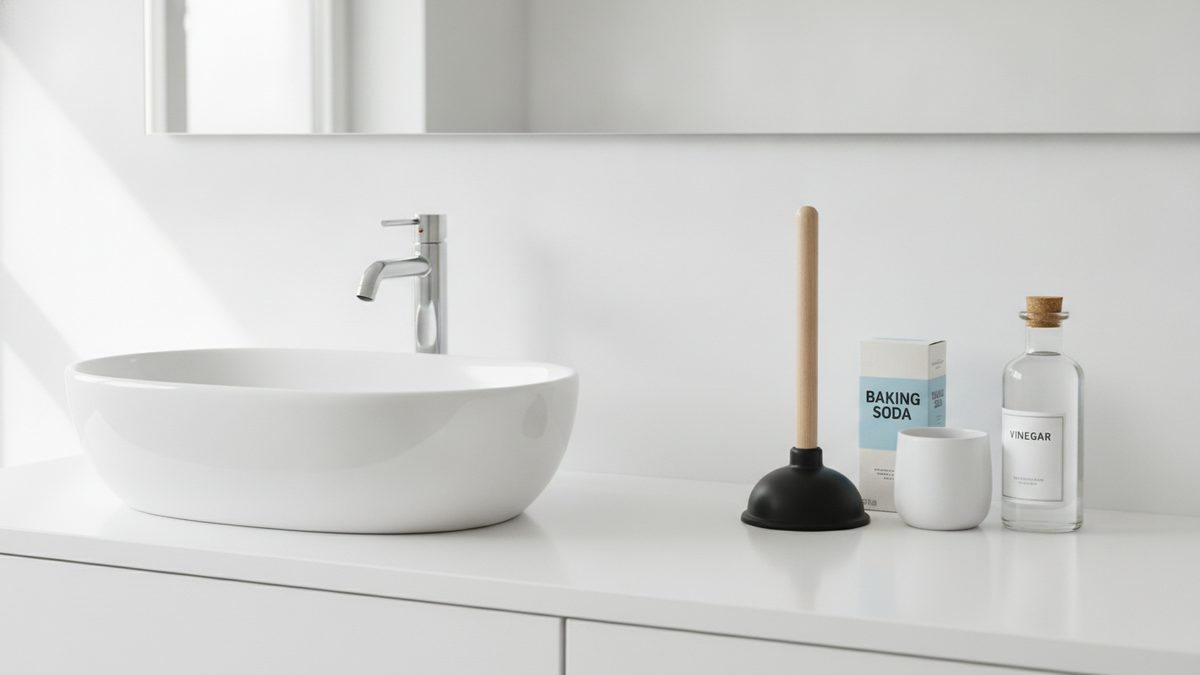
What to look for: A flange or "beehive" style plunger designed to seal a toilet bowl, not the flat red cup kind (that's for flat sink drains). A good one runs around $15–$20 (check current price). Keep it on a stand or in a holder so it's not a horror show.
What to skip (for now)
You do not need a full socket set, a circular saw, a multi-tool, or that 200-piece kit on launch day. Buy those when a specific project calls for them, and you'll buy better versions because you'll actually know what you need. The same goes for a cheap "homeowner combo kit" of throwaway hand tools, you'll replace every piece within a year.
One genuinely useful add-on once the basics are covered: a small assortment box of wall anchors, picture hooks, and assorted screws. Cheap, and it saves a hardware-store trip every single time you want to hang something.
The honest bottom line
All ten of these together cost roughly what one mega-set does, and every single one is a tool you'll keep using for decades. Buy the drill first, add the rest as the house gives you reasons to. That's how a real tool collection grows, one solved problem at a time, not one giant impulse purchase that lives in the garage untouched.
And if fixing things around the house gives you the itch to start building them, getting started in woodworking is the natural next step.