Woodworking is one of those skills that looks intimidating from the outside and turns out to be surprisingly learnable once you stop trying to start with something complicated. The people who get good at it quickly share one trait: they built a lot of small, simple things before they built anything impressive. The people who stall out share another: they spent too long watching videos and not enough time making sawdust.
This guide is for the person who wants to actually get good — not just watch someone else do it.
Start with hand tools, not power tools
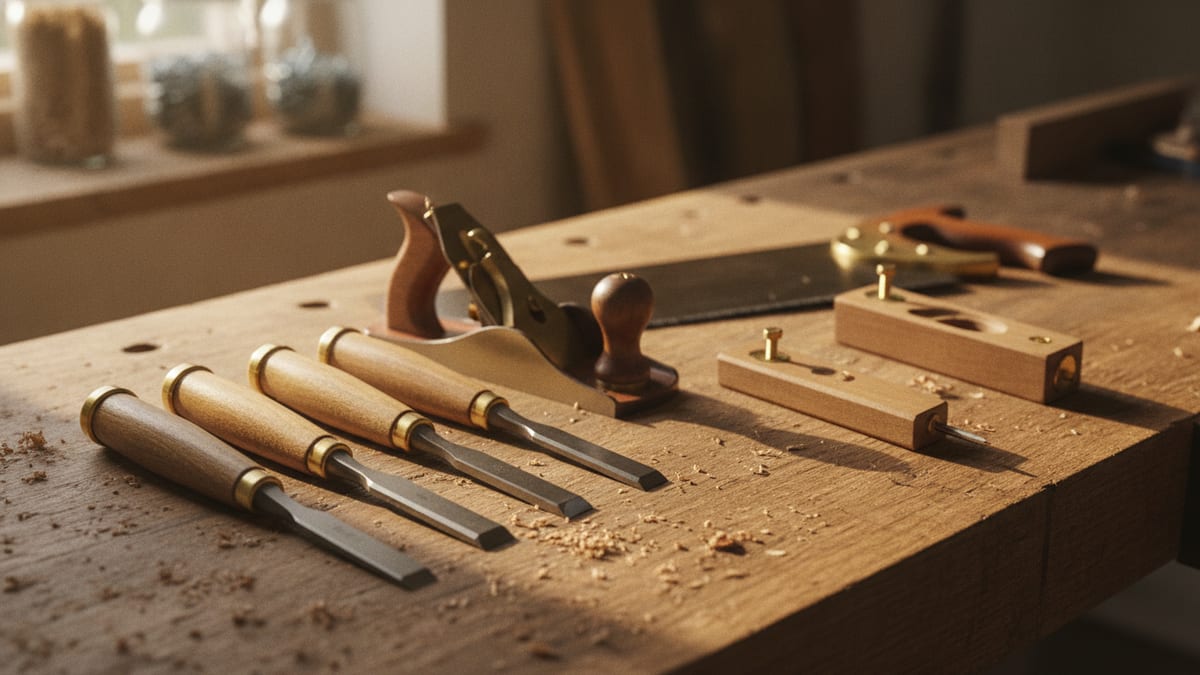
This is the advice most beginners ignore, and most experienced woodworkers wish they hadn't. Hand tools — a good chisel set, a hand saw, a block plane, a marking gauge — teach you to read wood, understand grain direction, and develop the feel for when a joint is right. Power tools make things faster. Hand tools make you better.
The practical reason to start with hand tools is also that they're forgiving in a way power tools aren't. A chisel that slips gives you a mark you can fix. A router that slips gives you a problem. Get comfortable with the basics of cutting, paring, and fitting joints by hand first. The power tools will make more sense, and you'll use them better, when you do pick them up.
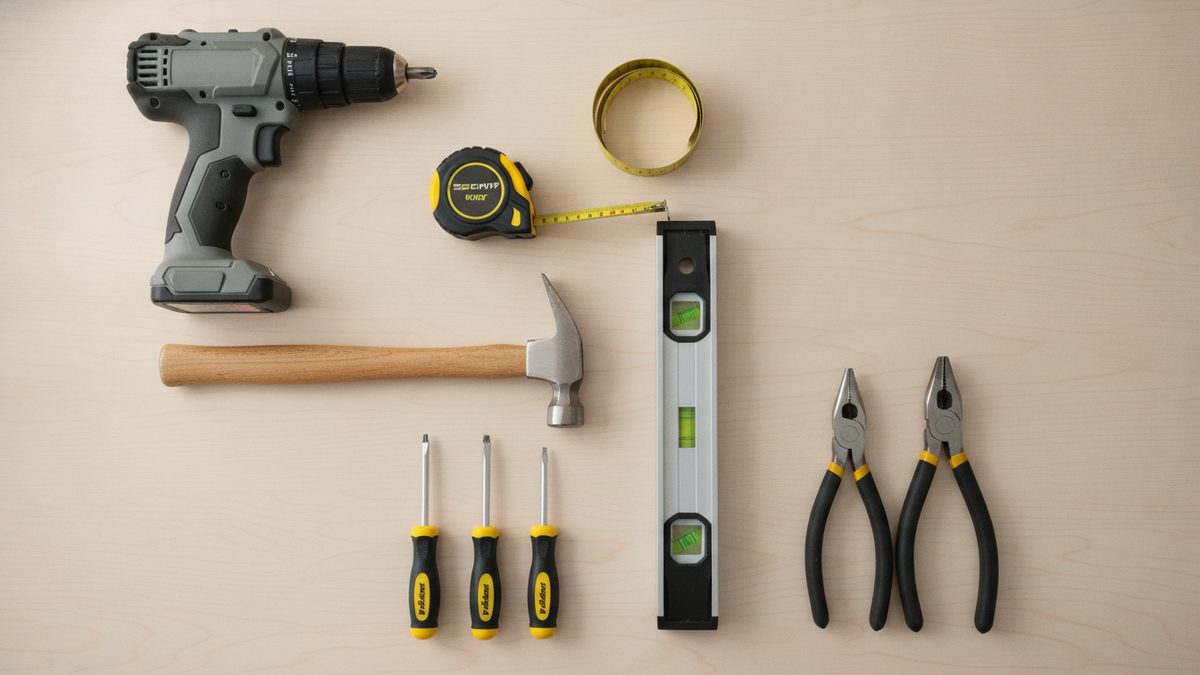
A starter hand tool kit that covers most beginner projects: a 25mm bench chisel, a 12mm bench chisel, a tenon saw, a coping saw, a block plane, a marking gauge, a combination square, and a mallet. That's it. Everything else is a nice-to-have. If you're not sure what else belongs in your kit, this guide to the tools every new homeowner actually needs is a good starting point.
The three joints that unlock most projects
You don't need to know every joint in the book. You need to know three well, and the rest follows.
The butt joint is the simplest — two pieces of wood meeting end-to-end or end-to-face, held with glue and screws or nails. It's not the strongest joint, but it's in half the furniture you own. Learning to cut and align it cleanly is the foundation.
The mortise and tenon is the joint that built most of the furniture made before the twentieth century. A tenon (a tongue cut on one piece) fits into a mortise (a slot cut in another). It's strong, it's elegant, and cutting one cleanly by hand teaches you more about woodworking than a month of watching tutorials. Start with a loose-fit version and work toward a snug one.
The dovetail is the joint people show off, and for good reason — it's strong, it's beautiful, and it signals that someone actually knows what they're doing. It's harder than the first two, but not as hard as its reputation suggests. Cut your first dozen in scrap wood before you put one in a real project.
How to actually improve (not just practice)
Repetition without feedback doesn't make you better — it makes you better at your current mistakes. The thing that accelerates woodworking skill is deliberate practice with a clear standard to hit.
For each joint or technique you're working on, define what "good" looks like before you start. For a mortise and tenon, good means the tenon slides in with hand pressure and no gap at the shoulder. For a dovetail, good means no light visible through the joint when held up to a window. Set the standard first, then practice to it.
The other accelerant is having projects that are slightly beyond your current skill. Not so far beyond that you're lost, but far enough that you have to figure something out. Projects that are too easy don't teach you anything. Projects that are too hard make you give up. The sweet spot is a project where you know how to do most of it and have to work out one or two new things.
Ted's Woodworking solves a real problem for people at this stage: running out of good projects to build. It's a collection of 16,000 woodworking plans across every skill level and project type — furniture, outdoor structures, storage, toys, tools, cabinets — each with cut lists, dimensions, and step-by-step instructions. The value isn't in any single plan; it's in having a library to pull from so you're never stuck wondering what to build next, and so you can always find something at the right difficulty level for where you are. It's been a long-running, widely-sold woodworking product for well over a decade, which in a niche full of one-hit wonders is a reasonable indicator that people actually use it.
The tools worth buying early (and the ones that can wait)
The tool that makes the biggest difference for beginners, beyond the hand tool basics, is a workbench with a proper vise. You cannot do precise work on a wobbly surface. A basic bench with a face vise doesn't need to be expensive — you can build one — but it needs to be solid and at the right height (roughly the height of your wrist when your arm hangs at your side).
After that, a random orbital sander and a drill/driver are the two power tools that earn their place early. Everything else — table saw, router, bandsaw, planer — can wait until you know you'll use it enough to justify the space and cost.
The tool that beginners consistently over-invest in early is the table saw. It's useful, but it's also the most dangerous tool in the shop and requires a lot of setup knowledge to use well. A decent hand saw and a shooting board will do most of what a table saw does for a beginner, more safely, for a fraction of the cost.
The honest part: it takes longer than the videos suggest
Woodworking content online has a compression problem. A 15-minute video shows you a completed joint. What it doesn't show is the hour of setup, the three failed attempts in scrap wood, and the afternoon spent sharpening a chisel that was too dull to cut cleanly. The gap between watching someone do it and doing it yourself is where most beginners get discouraged.
The honest timeline: most people can cut a decent mortise and tenon joint within their first ten hours of practice. A clean dovetail takes most people twenty to thirty hours of deliberate practice. A piece of furniture you'd actually be proud of usually takes a few months of regular weekend sessions. That's not discouraging — it's just the real shape of the learning curve, and knowing it means you don't quit at hour eight thinking you're doing something wrong.
Where to start
Pick one joint — the mortise and tenon — and cut it ten times in scrap wood before you start a real project. Get your bench sorted before you get your tools sorted. And find a library of plans at the right difficulty level so you always have something to build toward. The skill comes from building things, not from preparing to build things.