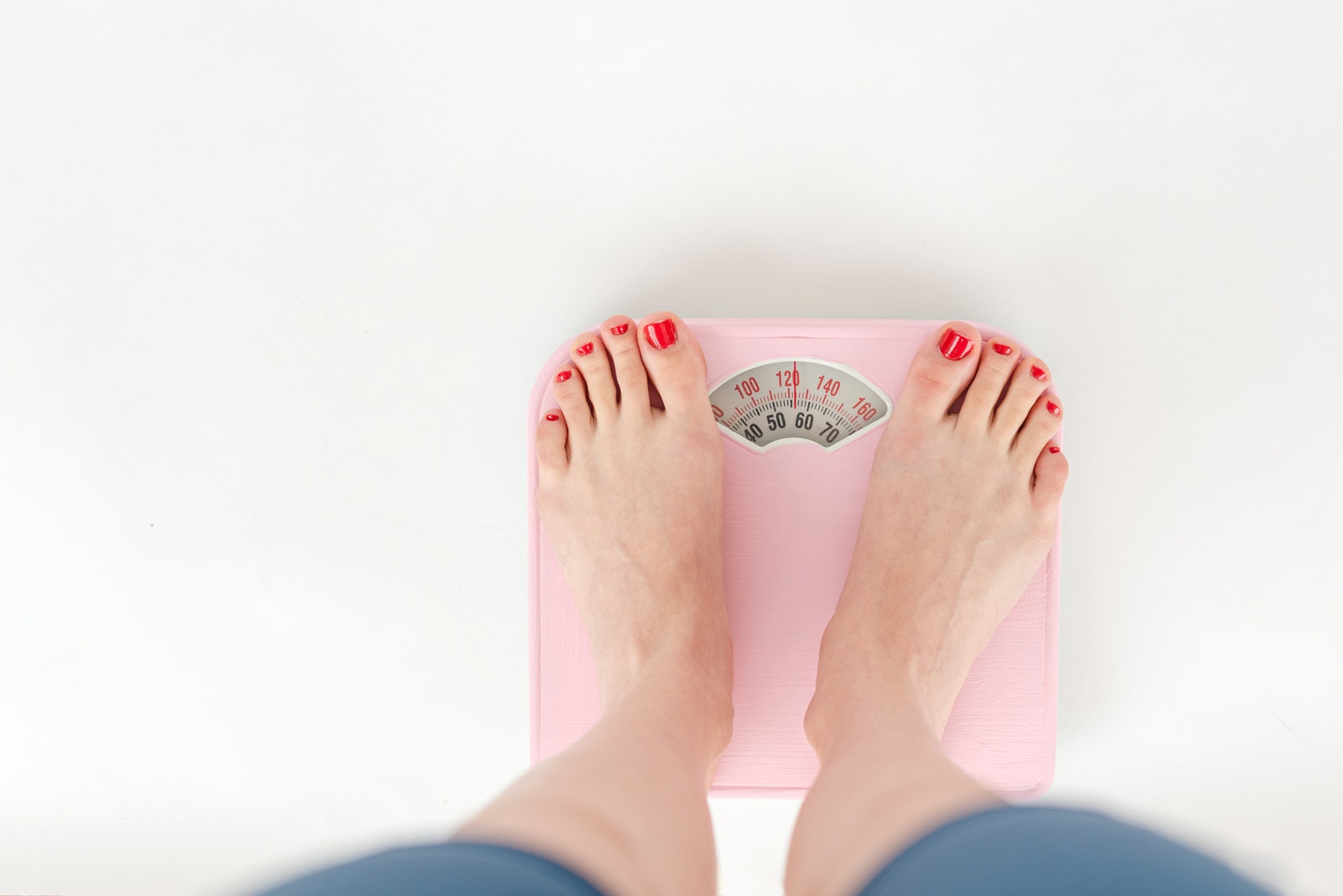
Calorie counting works, in the same way that tracking every penny you spend works. It's accurate, it's evidence-based, and most people find it exhausting, obsessive, and impossible to sustain past the first month. The good news is that you don't need it. The better approach is to change the conditions that make you eat more than you need, rather than trying to measure your way out of them.
If you haven't already, 20 ways to lose weight without going near a gym is worth reading alongside this — the two pieces cover different angles on the same goal.
Why calorie counting fails most people
The problem isn't the maths — it's the cognitive load. Weighing food, logging every meal, and staying under a number requires sustained attention and willpower at every single meal, every day, indefinitely. Willpower is a finite resource. Life gets busy. You eat at a restaurant. You have a bad week. The system breaks down, and most people don't restart it.
The alternative isn't to ignore energy balance — calories do matter, and the physics doesn't change. The alternative is to engineer your environment and eating patterns so that you naturally eat less without having to consciously track every bite.
The approaches with the best evidence
Eat more protein. This is the single most reliable lever for reducing hunger without counting anything. Protein is the most satiating macronutrient — it keeps you full longer, reduces cravings, and has a higher thermic effect (meaning your body burns more calories digesting it). Practically: make sure there's a meaningful protein source at every meal. Eggs, chicken, fish, Greek yoghurt, legumes. You don't need to weigh it. Just make it the centrepiece of the plate rather than an afterthought.
Eat mostly whole foods. Ultra-processed foods are engineered to override your satiety signals — the combination of fat, salt, sugar, and texture that makes it hard to stop eating. Whole foods don't do that. Swapping processed snacks and ready meals for whole-food alternatives is one of the most consistent findings in the weight loss literature: people who eat mostly whole foods naturally eat fewer calories without trying to.
Reduce liquid calories. Drinks don't register as food in the brain the way solid food does. A 500-calorie smoothie leaves you about as hungry as before you drank it. Sugary drinks, fruit juice, alcohol, and fancy coffee drinks are among the easiest places to cut without feeling deprived, because you won't miss the fullness you never got from them.
Eat slowly and stop at 80%. The satiety signal from your gut takes about 20 minutes to reach your brain. Eating fast means you've already overeaten by the time you feel full. Slowing down — putting the fork down between bites, eating without screens — gives the signal time to arrive. The Japanese concept of hara hachi bu — eating until you're about 80% full — is one of the dietary habits consistently associated with lower body weight in population studies.
Intermittent fasting: what it actually does
Intermittent fasting doesn't have magic metabolic properties. What it does is create a simple structural rule — you only eat within a certain window — that makes it harder to overeat without requiring you to track anything. The most common approach is 16:8: eat within an 8-hour window, fast for 16. Most people achieve this by skipping breakfast and eating between noon and 8pm.
The evidence is solid that intermittent fasting produces weight loss comparable to continuous calorie restriction for most people, with the advantage that many people find it easier to stick to a time rule than a calorie number.
Eat Stop Eat is a well-regarded guide to intermittent fasting written by Brad Pilon, a researcher who spent years studying the science of fasting. It's not a meal plan or a supplement pitch — it's a practical framework for using 24-hour fasts one or two times a week as a sustainable calorie-reduction strategy, with the research behind each recommendation explained clearly. The approach is simple enough that most people can start immediately without buying anything else.
The smoothie approach: useful if done right
Meal replacement smoothies have a mixed reputation, mostly because most commercial smoothies are sugar delivery systems with a kale leaf for optics. Done properly — with a protein source, fibre, healthy fats, and minimal added sugar — a smoothie can be a genuinely useful tool for people who struggle with breakfast or who need a fast, portable meal that doesn't lead to a vending machine raid two hours later.
The Smoothie Diet is a structured 21-day programme built around replacing two meals a day with high-protein, whole-food smoothies while eating one balanced whole-food meal. It's not a starvation plan — the smoothies are designed to be filling — and it comes with a shopping list and recipe guide that removes the decision fatigue of figuring out what to make. It's a good fit for people who want a structured starting point rather than a set of principles to figure out themselves.
One more thing worth knowing
Poor sleep makes all of this harder. Sleep deprivation disrupts the hormones that regulate hunger — specifically ghrelin (which signals hunger) and leptin (which signals fullness) — which is why people who sleep badly tend to eat more the next day. If you're doing the dietary work and still struggling, getting your sleep sorted is worth addressing in parallel.
Where to start
Pick one change, not five. If you eat a lot of processed food, start there. If you drink a lot of calories, cut those first. If you're already eating reasonably well but eating too much, try the 16:8 fasting window for two weeks. The evidence is clear that the best diet is the one you can actually stick to — which means the one that requires the least daily willpower, not the one with the most rules.
This is general information, not medical advice. Talk to a doctor before making significant dietary changes, especially if you have a health condition or take medication.